


Based On 2 Reviews on Tripadvisor and Google
The Annapurna Base Camp (ABC) trek is a popular trekking route in Nepal that takes you to the base of the Annapurna massif. This moderate trek offers stunning views of snow-capped peaks, lush forests, and terraced fields. The journey typically takes around 7-12 days, depending on your pace and itinerary.
The Annapurna Base Camp (ABC) with Poon Hill trek is an extraordinary journey that combines the beauty of two iconic trekking routes in Nepal. Starting from the vibrant town of Pokhara, this 11- to 14-day trek takes you through lush forests, terraced farmlands, and charming Gurung villages.
The trek begins with a gentle climb to Ghorepani, where you'll hike to Poon Hill (3,210m) for a breathtaking sunrise over the Annapurna and Dhaulagiri ranges. The panoramic views of snow-capped peaks, including Machhapuchhre (Fishtail), Annapurna South, and Hiunchuli, are unforgettable.
Starting from the vibrant city of Pokhara, you'll trek through charming Gurung and Magar villages, ascend through rhododendron forests, and cross various climatic zones. The highlight is reaching Annapurna Base Camp at 4,130 meters (13,550 feet), where you’re surrounded by towering peaks, including Annapurna I, the 10th highest mountain in the world, Annapurna South, AnnapurnaIII, Gangapurna and very famours and beautiful Machhapuchhrey(fishtail) and many more. The trek is known for its scenic beauty, cultural richness, and relatively accessible route.
This trek offers a perfect blend of cultural experiences, natural beauty, and moderate challenge. The Annapurna Base Camp with Poon Hill trek is ideal for trekkers seeking a rich Himalayan experience without extreme altitude challenges, making it a must-do adventure in Nepal.
Day 1: Arrived Kathmandu and transfer to hotel, 1350 m.
Day 2: Explore Nepal's Rich Heritage, 1350 m.
Day 3: Drive or Fly to Pokhara, 820 m.
Day 4: Drive to Nayapul and Trek to Tikhedhunga, 1540 m.
Day 5: Trek to Ghorepani, 2850 m.
Day 6: Hike to Poon Hill (3,210m) and Trek to Tadapani, 2630 m.
Day 7: Trek to Chhomrong, 2170 m.
Day 8: Trek to Dovan, 2600 m.
Day 9: Trek to Deurali, 3230 m.
Day 10: Trek to Annapurna Base Camp via Machapuchare Base Camp (3,700m), 4130 m.
Day 11: Trek to Bamboo, 2340 m.
Day 12: Trek to Jhinu Danda, 1780 m.
Day 13: Trek from Jhinu Danda to Nayapul and drive to Pokhara, 820 m.
Day 14: Drive/Fly to Kathmandu, 1350 m.
Day 15: Departure from Kathmandu
After arriving at TIA Airport Kathmandu, you must take an arrival visa from the immigration of Nepal for your stay in Nepal. However (15,30,90days), if you want to spend time in Nepal, you must pay ($30 for 15 days, 50 for 30 days). We also want to inform you that you may take up to 3 hours to complete all the procedures. It may vary according to the schedule of the plane and flight that you are coming from.
After that, we will stand at the arrival point with our banner and nameplate and take you to your hotel in the vehicle we have arranged. In this order, you will be welcomed with flowers and Khada (Special Buddhist prayer things). With all that, on the way to the hotel, you will find Nepali traffic jams, which can irritate you, but still, you will explore a little bit of the capital city of Nepal.
After we drop you off at the hotel, you will get your key as our/your reservation. Then, we will go for dinner somewhere in the proper Nepali style.
On the second day, you will start your Nepal tour with breakfast at the same hotel, where your journey will continue towards Boudhanath Stupa. After two hours of sightseeing, we will go to Bhaktapur Darbar Square, the oldest palace in Nepal, to see the archaeological heritage.
After that, after lunch, we will start our journey again to visit Pashupatinath Temple, the centre of the most significant faith of Hindus. The scenic view of Aarti in the evening and the view of the lighting will make your trip worthwhile. After a 1/2 hour visit to Pashupatinath, we will return to the hotel.
Reaching Pokhara is the first step to starting the Mardi Himal Trek. Here are the common ways to get to Pokhara:
1. By Flight (Most Convenient)
From Kathmandu: Domestic flights operate daily between Tribhuvan International Airport (Kathmandu) and Pokhara Airport.
Duration: 25–30 minutes. Cost: Approximately USD 100–150 (one way). Advantages: Saves time and offers spectacular aerial views of the Himalayas. Tip: Book flights in advance during peak trekking seasons (spring and autumn).
2. By Tourist Bus (Budget-Friendly)
From Kathmandu: Daily tourist buses leave early morning (6:30–7:30 AM) from Sorhakhutte or Kantipath.
Duration: 6–8 hours, depending on road conditions. Cost: USD 10–30. Advantages: Affordable and offers a scenic drive through hills, rivers, and villages. Tip: Opt for a luxury tourist bus for added comfort.
3. By Private Vehicle (Flexible but Expensive)
From Kathmandu: You can hire a private car, jeep, or van.
Duration: 5–6 hours. Cost: USD 120–200 (one way), depending on the vehicle size. Advantages: Flexibility in departure time and stops along the way.
4. By Local Bus or Microbus (Cheapest Option)
From Kathmandu: Local buses depart from Gongabu Bus Park.
Duration: 8–10 hours (often longer due to frequent stops). Cost: USD 5–10. Advantages: Very affordable. Disadvantages: Less comfortable and crowded
Once in Pokhara, you can explore the beautiful lakeside city, visit Phewa Lake, and soak in the tranquil atmosphere. Pokhara serves as the starting point for your trek. Overnight at a hotel in Pokhara.
In the morning, you’ll drive for about 1.5 hours to Nayapul, where the trek officially begins. The trail starts along a gentle path through lush farmlands, charming villages, and terraced fields. After crossing the suspension bridge over the Bhurungdi Khola, the trail gradually ascends toward Tikhedhunga. This initial day offers a taste of the natural beauty and cultural richness that defines the Annapurna region. Overnight at a teahouse in Tikhedhunga.
Today’s trek is one of the most physically challenging but rewarding as you ascend the stone steps to the village of Ulleri, a steep climb that tests your stamina. The trail then passes through dense rhododendron forests, which burst into colorful blooms in spring. After 6-7 hours of trekking, you’ll reach Ghorepani, a picturesque village nestled on a ridge. Ghorepani offers stunning panoramic views of the Annapurna and Dhaulagiri ranges. Overnight at a teahouse in Ghorepani.
An early morning wake-up call today for the hike to Poon Hill, one of the most iconic viewpoints in the Himalayas. The hour-long climb is well worth it as you witness a spectacular sunrise over the Annapurna and Dhaulagiri ranges, with the peaks glowing in hues of gold and pink. After soaking in the views and taking photos, you'll descend back to Ghorepani for breakfast. The trail then continues through rhododendron and oak forests toward Tadapani, offering scenic views along the way. Overnight at a teahouse in Tadapani.
Today’s trek takes you deeper into the Annapurna Sanctuary as you make your way to Chhomrong, a large Gurung village perched on a hillside. The trail descends through dense forests to Kimrong Khola, followed by a steep ascent. Along the way, you'll be treated to stunning views of Machapuchare (Fishtail) and Annapurna South. Chhomrong is the last major settlement before entering the more remote areas of the trek, and it offers breathtaking vistas of the surrounding peaks. Overnight at a teahouse in Chhomrong.
From Chhomrong, the trail descends to the Chhomrong Khola and then climbs steeply to Sinuwa, a small settlement. You’ll trek through dense bamboo forests and rhododendron groves, following the Modi Khola (river). The scenery becomes more rugged and remote as you approach Dovan, a peaceful village surrounded by towering cliffs and lush greenery. This day marks your entry into the sacred Annapurna Sanctuary, where mountains close in from all sides. Overnight at a teahouse in Dovan.
The trail continues along the Modi Khola, with steep ascents and descents through forests of bamboo, oak, and rhododendron. As you gain altitude, the landscape becomes more alpine, with fewer trees and more exposed rock. After about 4-5 hours of trekking, you'll reach Deurali, a small settlement with breathtaking views of the surrounding peaks. The atmosphere here is serene and remote, with a noticeable drop in temperature as you near the higher elevations. Overnight at a teahouse in Deurali.
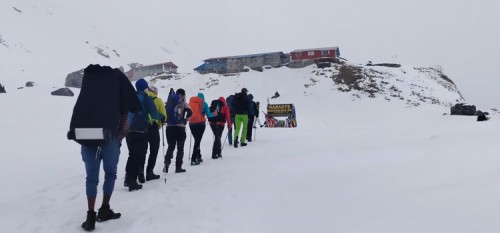
Today is the highlight of your trek as you head towards Annapurna Base Camp. First, you’ll pass Machapuchare Base Camp, a sacred site for the local people, located at the foot of the dramatic Fishtail peak. From here, the trail ascends gradually through alpine meadows and glacial moraines until you reach Annapurna Base Camp, surrounded by towering peaks. The 360-degree panorama includes Annapurna I, Machapuchare, Hiunchuli, and other majestic peaks. After a rewarding day, you’ll rest at ABC, enjoying the awe-inspiring beauty of the Annapurna Sanctuary. Overnight at a teahouse in ABC.
After soaking in the sunrise at Annapurna Base Camp, you'll begin your descent. The return journey retraces your steps back down through Machapuchare Base Camp, Deurali, and Dovan, eventually reaching Bamboo. The trek is mostly downhill, but it’s still challenging due to the rocky terrain. The landscape changes again as you descend from the alpine zone back into lush forests. Overnight at a teahouse in Bamboo.
From Bamboo, the trail ascends back to Sinuwa and then descends to Chhomrong. After a brief break, you’ll descend steeply to Jhinu Danda, a village famous for its natural hot springs. After a long day of trekking, you can relax your muscles in the soothing hot water pools near the river. The experience is a perfect way to rejuvenate after several days of strenuous hiking. Overnight at a teahouse in Jhinu Danda.
On your final trekking day, you’ll follow the trail from Jhinu Danda down to Nayapul. The trek is relatively easy, passing through terraced farmlands, small villages, and forests. After reaching Nayapul, you’ll drive back to Pokhara, where you can enjoy a well-deserved rest. Spend the evening relaxing by the lakeside or exploring Pokhara’s vibrant nightlife. Overnight at a hotel in Pokhara.
*But now also available to drive from after crossing the long suspension bridge of Jhinu.
In the morning, you’ll either drive or fly back to Kathmandu. The drive offers a scenic journey through the Nepalese countryside, while the flight gives you a final glimpse of the Himalayas.
Once in Kathmandu, you can spend the rest of the day exploring historical sites like Swayambhunath (Monkey Temple) or Durbar Square, or shopping for souvenirs in Thamel. Overnight at a hotel in Kathmandu.
Your unforgettable Annapurna adventure With jolly HImalaya is concludes today. Depending on your flight schedule, you may have time for some last-minute sightseeing or shopping before being transferred to Tribhuvan International Airport for your onward journey.
.png)
The best seasons are spring (March-May) and autumn (September-November). These months offer clear skies, stable weather, and breathtaking views of the Annapurna and Dhaulagiri ranges.
This trek is rated as moderate. It involves gradual ascents, well-maintained trails, and daily hikes ranging from 5–7 hours. Suitable for trekkers with basic fitness levels.
The trek takes 8–12 days, depending on your starting point, pace, and itinerary. This includes exploring Poonhill and acclimatizing at higher altitudes.
The trek reaches a maximum altitude of 4,130 meters (Annapurna Base Camp). Gradual elevation gain and proper rest days help prevent altitude sickness.
Teahouses provide basic lodging and meals along the trail. Expect cozy rooms, warm blankets, and hearty dishes like Dal Bhat, noodles, and momos.
Poonhill, at 3,210 meters, is renowned for its spectacular sunrise views over the Annapurna and Dhaulagiri ranges, a highlight of the trek.
Immerse yourself in Gurung and Magar villages, where you can experience local traditions, hospitality, and the unique mountain lifestyle.
Trekkers need the Annapurna Conservation Area Permit (ACAP) and Trekkers’ Information Management System (TIMS) card, both obtainable in Kathmandu or Pokhara.
Essential items include warm layers, sturdy trekking boots, trekking poles, rain gear, and a sleeping bag. Lightweight and weather-appropriate clothing is key.
This combination of natural beauty, cultural richness, and rewarding challenges makes the Annapurna Base Camp via Poonhill a must-experience trek!
The trek usually starts from Nayapul or Ghandruk, both accessible by a short drive from Pokhara. Pokhara is well-connected by road or air from Kathmandu.
Note; Now (if the road is not effect by landslide) you can take a Jeep till Banthati and from there only 3 hours trek to Ghorepani to skip the straight uphill between Tikhedhunga and Ulleri.
Accommodation: Kathmandu offers everything from budget guesthouses to luxury hotels, especially in the Thamel area, which is a hub for trekkers.
Sightseeing: While in Kathmandu, visit famous sites like Swayambhunath (Monkey Temple), Boudhanath Stupa, and Durbar Square.
Getting around: Taxis, buses, and ride-sharing apps like Tootle are available, and walking around Thamel is also convenient.
Shopping: Thamel is a great place for last-minute trekking gear and souvenirs.
The best times are spring (March-May) and autumn (September-November) for clear skies and moderate weather.
It’s a moderate trek suitable for beginners with good fitness. Expect daily hikes of 5-7 hours with some steep sections.
The trek typically takes 8-12 days, depending on your pace and itinerary.
Yes, you need the Annapurna Conservation Area Permit (ACAP) and Trekkers’ Information Management System (TIMS) card.
The maximum altitude is 4,130 meters (Annapurna Base Camp). Proper acclimatization is essential.
Guides and porters are optional but highly recommended for a safer and more enjoyable experience.
Teahouses along the trail offer basic rooms with simple meals, including local dishes like Dal Bhat.
Essentials include:
Yes, it’s a popular and well-marked route, but trekking with a group or guide enhances safety.
Poonhill is famous for its stunning sunrise views over Annapurna and Dhaulagiri ranges, making it a highlight of the trek.
The Annapurna Base Camp trek is a popular trekking route in Nepal’s Annapurna region, taking you through stunning landscapes, traditional villages, and up to the base of Annapurna I, the world’s 10th highest mountain at 8,091 meters.
Yes, a visa is required for most foreign nationals to enter Nepal. You can get a Tourist Visa on arrival at the airport or apply in advance at a Nepali embassy.
Visa Fees:
Ensure your passport is valid for at least six months from the entry date.
No prior trekking experience is needed, but being physically fit is important. Cardio, strength training, and practice hikes with a weighted backpack are good ways to prepare.

15 Days From $ 850

12 Days From $ 1350

9 Days From $ 300

2 Days From $ 160

15 Days From $ 350

6 Days From $ 299

7 Days From $ 400

9 Days From $ 400

7 Days From $ 200

7 Days From $ 180
© 2023 - 2026 All rights reserved. Jolly Himalaya Developed By : Xenatech Nepal

 15 Days
 Kathmandu
 Meals
Meals Breakfast



Roanna Boyle Nepal On 2022-03-20
Annapurna Base Camp Trek
The Annapurna Base Camp Trek was the adventure of a lifetime! The breathtaking views of the Annapurna massif left me speechless at every turn. Our guide was incredibly knowledgeable, sharing insights about the local culture and the flora and fauna along the trail. The teahouses were cozy, and the food was delicious. Reaching the base camp and witnessing the sunrise over the mountains was truly a spiritual experience. I highly recommend this trek for anyone looking to immerse themselves in nature and adventure!
Roshan Raj Nepal On 2022-03-11
NEPAL Is A Heaven On Earth.
“I must say that NEPAL is a heaven on earth. Once I fixed my mind to trek to Annapurna Base camp, I was looking for a nice guide to accompany me for the trek. I met some guides who I found on the internet and I was disappointed and felt hopeless after having conversations with them.
Some time passed away and I finally met Deepen Paudel, a sweet gentleman through a friend of mine from Kathmandu. We had conversations about the trek and we scheduled our trek. His tariffs are affordable too. We left for Pokhara the next day. We Did Annapurna Base camp Trek via Poon hill. He helped me to save the extra pennies in many places by speaking with the shopkeepers in Nepali. In Pokhara, he helped me to get the trek permits and the legal works for the trek.
We had 13 days together on the trek in winter. It was freezing cold and the whole mountain is deserted due to Covid. We had a fun time together we trekked together and we discussed cultures, life, and whatnot. Deepen is a helpful person by nature and it was not like I was trekking with my guide, I felt like I was trekking with my childhood buddy.
My trek was beautiful and enjoyable because of Deepen. I will recommend him to anyone. He is knowledgeable, experienced, hardworking, and easygoing. More than a tour guide, he will be your best buddy. Eagerly waiting to go to Nepal again and plan my next trek with him.” ~ Roshan Raj, Tamilnadu, India