

Kangchenjunga is the third-highest mountain in the world, standing at an elevation of 8,586 meters (28,169 feet) above sea level. It is located on the border between Nepal and the Indian state of Sikkim, in the eastern Himalayas of South Asia. The mountain is renowned for its stunning beauty and challenging climbing conditions.
There are two main trekking routes in the Kangchenjunga region:
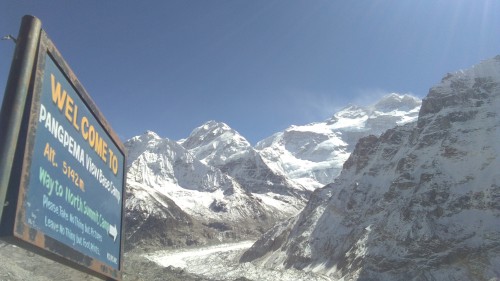
Kangchenjunga North Base Camp (Pangpema): This trek leads to the north side of Kangchenjunga, offering stunning views of the mountain’s towering north face. The trail passes through remote villages like Ghunsa and climbs through high alpine meadows to the base camp at Pangpema (5,143 meters).
Kangchenjunga South Base Camp (Yalung Glacier): This route explores the southern face of Kangchenjunga, passing through rhododendron forests, yak pastures, and glacial terrain. The trek culminates at Ramche and Oktang, offering incredible views of the Yalung Glacier and the south face of Kangchenjunga.
The Pangpema Base Camp Trek is a spectacular journey to the northern base camp of Kangchenjunga, the world’s third-highest mountain, located in the remote and rugged eastern region of Nepal. Known for its pristine wilderness, diverse landscapes, and cultural richness, this trek offers a true wilderness experience for adventurous trekkers. Pangpema, the base camp itself, provides an awe-inspiring vantage point for viewing Kangchenjunga and its surrounding peaks.
Starting Point: The trek begins in Taplejung, a small town in eastern Nepal, after a scenic flight to Bhadrapur and a drive to Taplejung.
Trail Journey: You trek through picturesque villages like Sekathum, Amjilesa, Gyabla, gradually ascending through subtropical valleys and temperate forests to alpine regions. Highlights include the Tibetan village of Ghunsa and the high-altitude yak pastures of Kambachen.
Pangpema Base Camp: The final stretch leads to Pangpema, the northern base camp of Kangchenjunga. The base camp sits in a dramatic glacial amphitheater, surrounded by some of the most imposing peaks in the Himalayas. The views of Kangchenjunga's north face are particularly breathtaking from this point.
Duration: The trek typically takes 15-22 days, including travel time, rest days for acclimatization, and the return journey.
Difficulty: The Pangpema Base Camp Trek is considered a challenging trek, suitable for experienced trekkers due to its long duration, rugged terrain, and high altitude. Proper acclimatization is essential to avoid altitude sickness, especially at higher camps like Lhonak (4,780 m) and Pangpema (5,143 m).
Spring (March to May): The trails are decorated with blooming rhododendrons, and the weather is generally clear.
Autumn (September to November): Offers crisp weather and excellent visibility, making it the ideal season for mountain views.
The trek falls within the Kangchenjunga Conservation Area, which covers diverse ecosystems ranging from lowland subtropical forests to alpine landscapes. The conservation area is not only vital for preserving flora and fauna but also safeguards the traditional lifestyles of the local people, who are stewards of this sacred region.
In summary, the Pangpema/North Base Camp Trek is a true Himalayan adventure, offering stunning mountain vistas, cultural experiences, and a chance to explore one of the most remote and beautiful corners of Nepal.
Day 1: Arrival Experience in Kathmandu, 1350 m.
Day 2: Fly to Bhadrapur/ Biratnagar,and drive to Taplejung, 1500 m.
Day 3: Drive to Sekhathum and Trek to Lama Tar, 1800 m.
Day 4: Trek to Dhangyam, 2040 m.
Day 5: Trek to Ghunsa, 3430 m.
Day 6: Acclimatization in Ghunsa, 3430 m.
Day 7: Ghunsa to Kambachen, 4100 m.
Day 8: Rest day at Kambachen, 4792 m.
Day 9: Kambachen to Lhonak, 4792 m.
Day 10: Lhonak to Pangpema - North Base Camp, 5140 m.
Day 11: Return to Ghunsa, 3430 m.
Day 12: Trek back to Sekhathum, 1660 m.
Day 13: Drive back to Taplejung/Suketar and head to Pathivara Temple, 1500 m.
Day 14: Drive to Bhadrapur/ Biratnagar and Fly to Kathmandu, 1350 m.
Day 15: Fly back to home
After arriving at TIA Airport Kathmandu, you must take an arrival visa from the immigration of Nepal for your stay in Nepal. However (15,30,90days), if you want to spend time in Nepal, you must pay ($30 for 15 days, 50 for 30 days). We also want to inform you that you may take up to 3 hours to complete all the procedures. It may vary according to the schedule of the plane and flight that you are coming from.
After that, we will stand at the arrival point with our banner and nameplate and take you to your hotel in the vehicle we have arranged. In this order, you will be welcomed with flowers and Khada (Special Buddhist prayer things). With all that, on the way to the hotel, you will find Nepali traffic jams, which can irritate you, but still, you will explore a little bit of the capital city of Nepal.
After we drop you off at the hotel, you will get your key as our/your reservation. Then, we will provide you with a welcome dinner somewhere in the proper Nepali style.
A short flight to Bhadrapur/ Biratnagar is followed by a scenic drive to Taplejung, Fungling Bazar, the Headquater of Taplejung. The drive offers beautiful views of the rolling hills and terraced farmlands.
Note: If we fly to Bhadrapur we will drive through Ilam Tea Garden(Kanyam), and it will take 9-10 hrs drive in average. And if we fly to Biratnagar then we will follow through Tamor Corridor which is only 6-7 hrs drive to Fungling Bazar.
The next day we will drive to Sekhathum which is approx. 4 hours off road drive through dense forests and follows the Tamor River. After crossing a suspension bridge of Tamor River and after that will follow the Ghunsa River till Pangpema Base Camp. After reaching Sekhathum will stop for Lunch and tea there. And next will start our first day of trek towards Lama Tar(2 hrs) where you will explore beautiful Cardamom Farming.
The trek becomes more challenging as you ascend steeply along the river, passing waterfalls and crossing several bridges. After reaching Amjilesa we will take short hike and down to Dhangyam/ Thangyam
Today's trek takes you to the famous village of Ghunsa, which serves as a major stop for expeditions heading to Kangchenjunga. Ghunsa is a large Tibetan village with prayer flags, monasteries, and traditional stone houses.
The trail continues through forests of bamboo, pine, and rhododendron, gradually climbing to the village of Gyabla and Fale village. The mountain views become more prominent as you ascend.
A rest and acclimatization day in Ghunsa. You can take short hikes around the village or visit the nearby monastery. This helps your body adjust to the altitude before moving higher.
As you ascend to Kambachen, the landscape becomes more barren, and the views of the snow-capped peaks intensify. You’ll pass through yak pastures and cross rivers via wooden bridges.
Khambachen is a small, picturesque settlement nestled in an open valley surrounded by towering snow-capped peaks. The village sits above the tree line, with sweeping views of glaciers, rocky moraines, and distant mountain summits. It’s an ideal place to rest and adjust to the increasing altitude before pushing higher on your trek. 10km/6hrs
Taking a rest day at Khambachen is not only essential for acclimatization but also a fantastic opportunity to explore the stunning surroundings, especially the incredible views of Kumbhakarna (also known as Jannu). This 7,710-meter (25,295 feet) mountain, renowned for its dramatic and imposing face, stands as one of the most spectacular peaks in the Kangchenjunga region.
Spending a rest day at Khambachen helps your body adjust to the high altitude before continuing to higher elevations like Lhonak and Pangpema Base Camp. Light exploration and hiking on this day improve circulation and prepare you for the ascent while giving you a much-needed break from strenuous trekking.
A high-altitude trek through rocky terrain and moraines leads you to Lhonak. The views of mountains like Jannu (Kumbhakarna) and the Kangchenjunga massif are breathtaking from here.
This is the highlight of the trek, as you hike to Pangpema, the North Base Camp of Kangchenjunga. The panorama of Kangchenjunga’s towering peaks is overwhelming. After spending some time at base camp, you return to Lhonak. - 7.7km*2 /10hrs
Retrace your steps back to Ghunsa, passing through the beautiful landscapes you crossed earlier. The descent is much easier than the ascent, allowing you to enjoy the scenery more. -16km/8hrs
Same way back to Sekhathum and stay on the tea house over there which is like a home stay type.
After completing your trek in the Kangchenjunga region, you will embark on a scenic drive from Sekathum back to Suketar, the nearest airport and gateway to this remote region. The route passes through picturesque villages, terraced fields, and forests, providing a glimpse of the beautiful landscapes and the traditional lives of the local Limbu and Rai communities.
Once you reach Suketar, you can either drive or trek to the Pathivara Temple, a revered pilgrimage site located at an altitude of 3,794 meters. The temple is a significant destination for Hindu and Buddhist pilgrims, as Pathivara Devi (the goddess of Pathivara) is believed to fulfill the wishes of her devotees.
And same day we are going to come back to Taplejung/ Fungling Bazar.
Afte concluding our trip of Kanchanjunga, we will drive to either Bhadrapur or Biratnagar (according to our plan) to take Flight to Kathmandu
Fly back home as your schedule.
The Kanchenjunga North Base Camp Trek takes you through the rugged landscapes of the Kanchenjunga Conservation Area, offering breathtaking views of the Kanchenjunga massif and surrounding peaks. This trek is less crowded and provides a more remote, authentic Himalayan experience.
The trek typically takes 18-22 days, including travel, acclimatization, and trekking days, depending on the route and itinerary you choose.
This trek is considered challenging due to its remote nature, long trekking days, steep ascents, and high altitudes. Trekkers should have prior trekking experience and good physical fitness.
The best time to trek to Kanchenjunga North Base Camp is during spring (March-May) and autumn (September-November), when the weather is stable, and the views are clear.
Accommodation is available in teahouses or lodges along the trek. Expect simple, basic facilities, with shared rooms and local Nepali meals like dal bhat and noodles. Higher up, the teahouses are more basic.
The highest point on the trek is Pangpema Base Camp at 5,143 meters. Proper acclimatization is crucial to avoid altitude sickness, which can affect trekkers above 3,000 meters.
This trek offers a unique cultural experience, with opportunities to interact with the Limbu and Rai communities, who follow traditional lifestyles and Tibetan Buddhist practices.
The Kanchenjunga region is rich in biodiversity, home to snow leopards, red pandas, and Himalayan tahr, as well as lush forests and alpine meadows. The trek passes through the Kanchenjunga Conservation Area, a protected area that is rich in flora and fauna.
To trek in the Kanchenjunga region, you need to obtain a Kanchenjunga Conservation Area Permit (KCAP) and a Trekking Permit. These permits must be arranged by your trekking agency before departure.
The trek begins in Taplejung, which can be reached by a short flight from Kathmandu followed by a drive to the trek starting point. The trek ends at Pangpema and returns to Taplejung via the same route.
This additional information helps you prepare for your Kanchenjunga North Base Camp Trek, ensuring a smooth and rewarding adventure in one of Nepal’s most remote and stunning trekking regions.


The Kanchenjunga North Base Camp Trek takes you to the remote north face of Mount Kanchenjunga, the third-highest peak in the world. The trek offers stunning Himalayan views, diverse landscapes, and cultural experiences.
The trek generally takes 18-22 days, depending on the chosen itinerary, acclimatization days, and your pace of trekking.
The Kanchenjunga North Base Camp Trek is considered challenging due to long days, high altitudes (up to 5,143 meters), and remote trails. Good physical fitness and previous trekking experience are recommended.
The best times to trek to Kanchenjunga North Base Camp are spring (March-May) and autumn (September-November), offering clear skies, moderate temperatures, and optimal trekking conditions.
You will need the Kanchenjunga Conservation Area Permit (KCAP) and a Trekking Permit for the region. Your guide will assist with all the necessary paperwork.
The Kanchenjunga North Base Camp (Pangpema) sits at an elevation of 5,143 meters, offering breathtaking views of Kanchenjunga and the surrounding peaks.
Accommodation is in teahouses or lodges along the route. Expect basic facilities with shared rooms, and simple meals like dal bhat, noodles, and rice.
Wi-Fi is available in some teahouses, but connectivity is limited and can be unreliable, especially as you ascend higher.
Altitude sickness is a concern on high-altitude treks like Kanchenjunga. Proper acclimatization, slow ascent, staying hydrated, and consulting your guide if symptoms appear can help reduce the risk.
No, the Kanchenjunga North Base Camp Trek requires a licensed guide and permits for the restricted area. Solo trekking is not permitted in this region.

15 Days From $ 2250
© 2023 - 2026 All rights reserved. Jolly Himalaya Developed By : Xenatech Nepal
 15 Days
 Kathmandu
 Meals
Meals Breakfast